
Restoring the past, building the future
By: Uri Shalev | Last updated: 8/18/2026
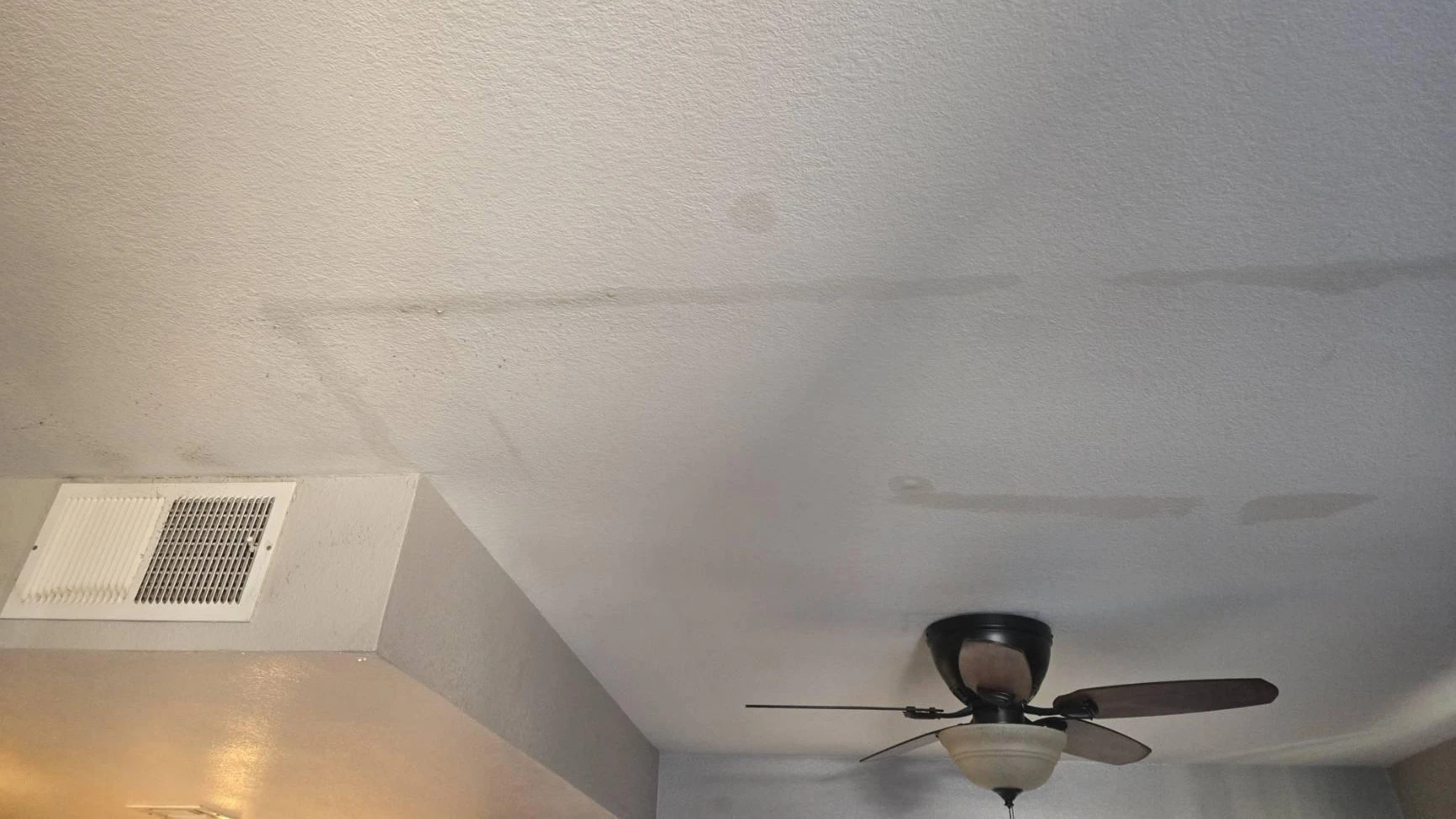
Most AC leaks trace back to a clogged condensate drain line, and Vegas dust makes those clogs more common here than almost anywhere. A frozen coil from a dirty filter, a rusted drain pan, or an off-level unit can cause the same puddle. The leak itself is usually a cheap fix. The expensive part is the water nobody notices: once it soaks drywall, insulation, or framing, you’re into mold territory and a real repair. Stain on the ceiling, a sagging patch, or a musty smell near a vent? That’s the point where you call us: (702) 475-7575, 24/7.
An air conditioner makes water. That’s not a defect, that’s the job: while it cools your house it also wrings humidity out of the air, and the moisture has to land somewhere. A bit of dampness around the unit is nothing.
However, A puddle under it is something, and so is a brown ring on the ceiling that wasn’t there Friday. And this is Vegas, where the AC barely gets a night off between May and September, so a drip that might stay a nuisance somewhere cooler gets hundreds of hours of runtime to work on your drywall. The question worth answering: which leaks are harmless, and which ones are quietly eating the house? Read on.
Inside your system sits the evaporator coil. Air blows across it, the coil chills it, and the humidity in that air condenses on the cold metal the way a soda can sweats on a patio table. Gravity takes it from there: the water drips into a pan under the coil and leaves through a condensate drain line, the skinny white PVC pipe you’ve probably noticed poking out of an exterior wall.
None of this asks anything of you while it works. Clog it, crack it, or tilt it, and the water starts choosing its own exit. In our experience the exit it likes best is somebody’s ceiling. The calls usually start with a stain that showed up overnight, and Enterprise and Spring Valley seem to produce more of them than anywhere else in the valley.
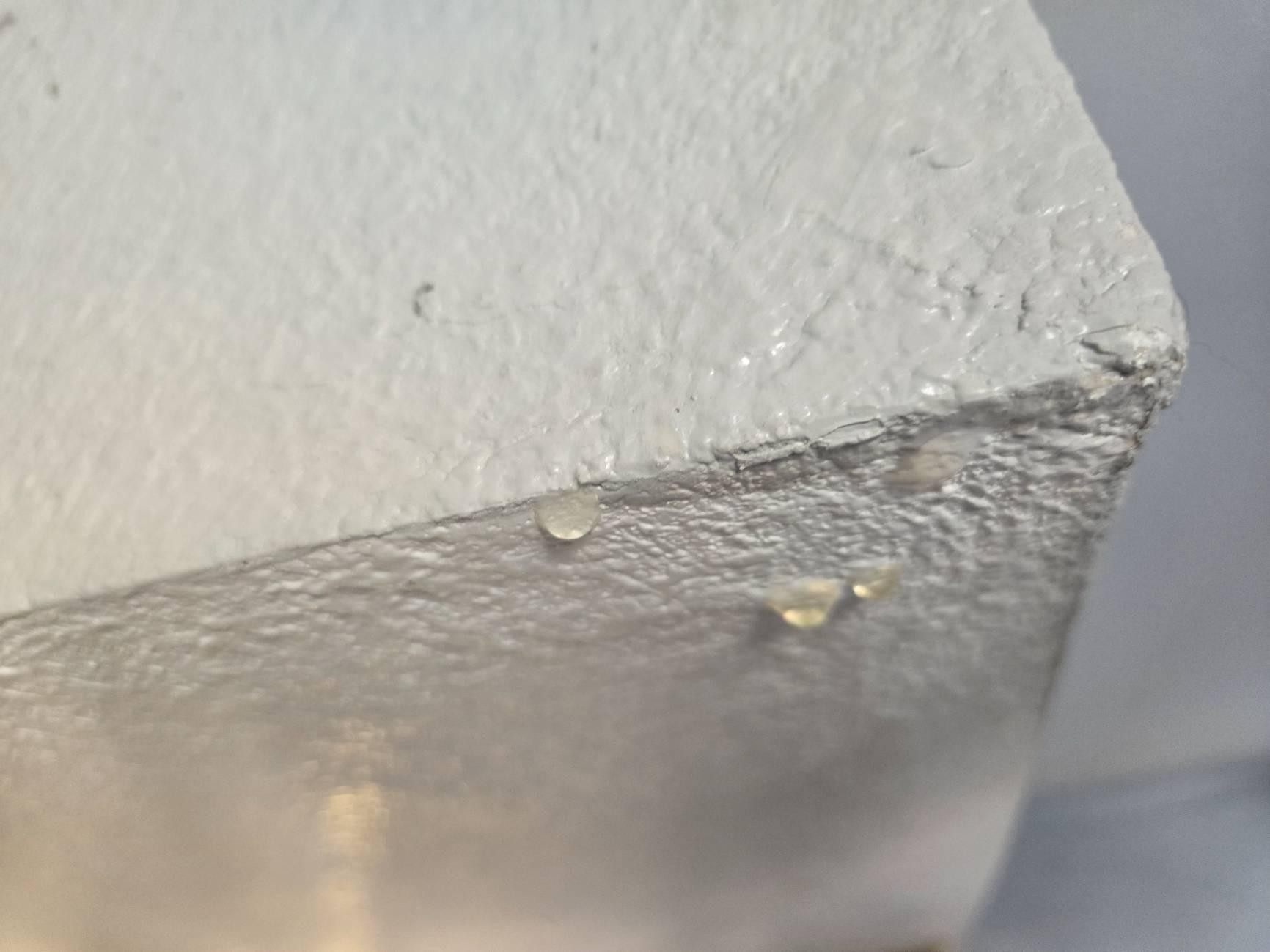
Nine times out of ten the villain is the condensate drain line. And Vegas gives that line a harder life than most places for a single reason: dust.
The fine desert dust gets pulled into the system, meets the moisture in the line, and cooks down into a sludge that algae is happy to colonize. Give it a season and the pipe closes up. Water backs into the pan, the pan runs over, and now you have a leak. With attic units, and half the valley has attic units, the overflow finds your ceiling first.
Got a wet/dry vac? You can sometimes rescue the line yourself: find where it exits the house and pull suction on the open end until the clog lets go. No luck, or not sure which pipe you’re even looking at? An HVAC tech clears these in minutes.
The line isn’t always the culprit.
Check the filter first. A choked filter starves the coil of airflow until it ices over, a solid brick of it, and when the ice lets go the meltwater arrives all at once, far more than the pan was sized for. If you can’t remember when you last swapped the filter, that alone could be your leak. Monthly changes through summer, minimum.
Drain pans themselves rust through on older units, and then it doesn’t matter how clear the line is, water just falls past it. Low refrigerant ices the coil the same way a dirty filter does. Even a unit installed slightly out of level can tip the pan enough to spill over one edge instead of draining.
Here’s where the cheap fix turns expensive.
AC leaks don’t gush. They drip. Hour after hour, in an attic or a closet, while you’re at work, while you sleep. Days of that can pass before the first stain surfaces, and by then the water has already been working through drywall, insulation, and framing.
A warm house plus wet building materials equals mold, and it doesn’t wait long. Soaked attic insulation loses its insulating value and can stay damp for weeks. That’s how July’s shrugged-off drip becomes August’s mold-and-drywall project.
A spreading stain, a soft or sagging patch, a musty smell near a vent: any of those means the water is in the structure already, past what a shop vac can reach.
Kill the AC first so it stops feeding the leak. Bucket under the drip, valuables out of the splash zone. Then photograph everything, ceiling, wall, the unit itself, because if insurance gets involved you’ll be glad you did.
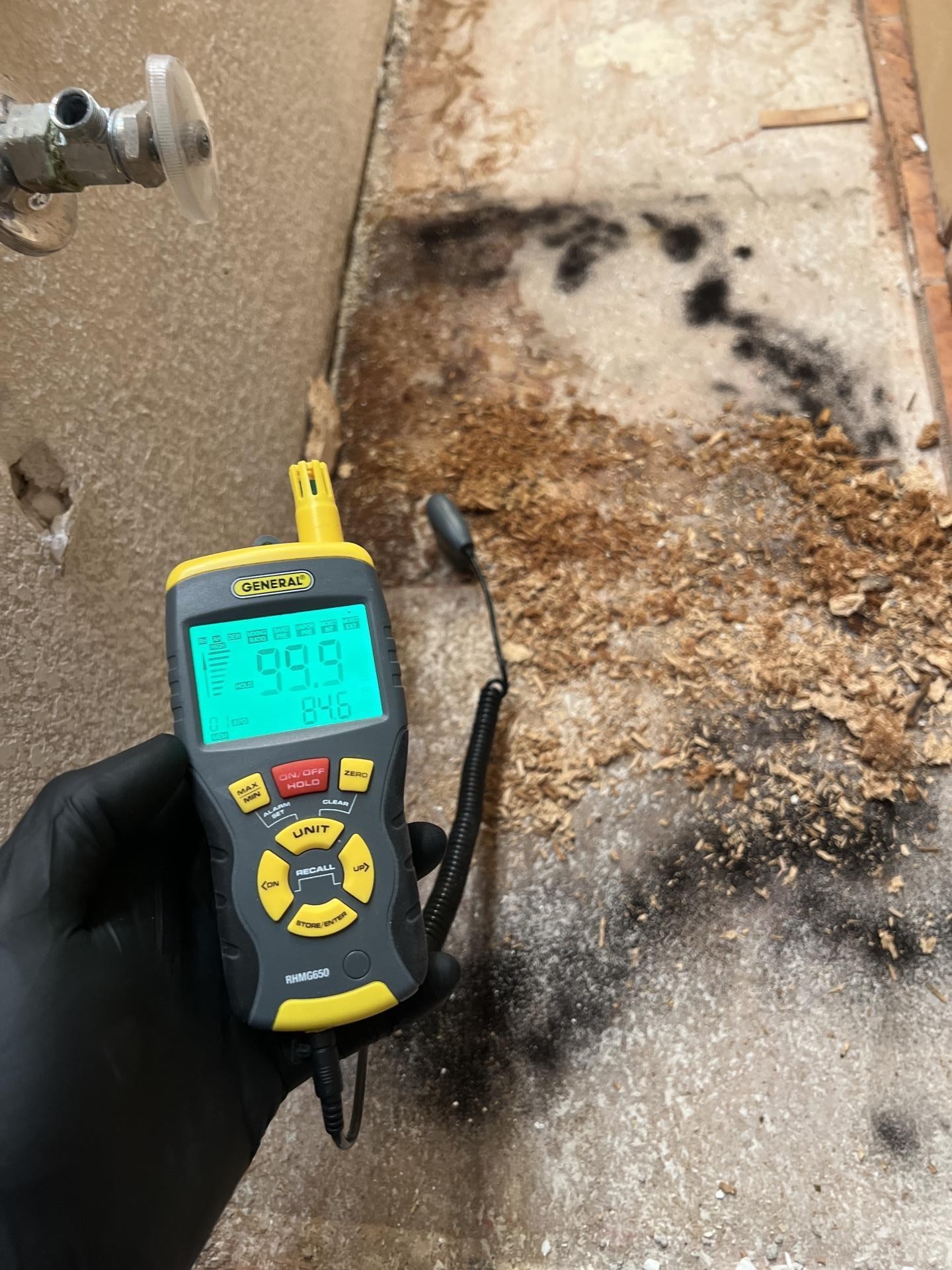
Past a surface drip, this stops being a mop-up job. Water that’s reached drywall, insulation, or framing has to be traced with moisture meters and dried at the source, or it just sits there breeding mold. That’s our lane: we handle the water damage restoration, the drying, the stained ceiling, the repaint, one crew instead of three.
Stain on the ceiling? Soft spot? A smell you can’t place? Call (702) 475-7575, we answer around the clock across the valley. Early is a patch. Late is a rebuild.